The Largest Stockist of Conveyor Belting in Southern Africa

Support Hub

Storage & Handling

Good storage and handling practices protect belt performance before installation and help preserve the product condition.

Correct storage and handling of conveyor belts is critical to maintaining belt integrity, performance and service life. Stored conveyor belts should be monitored at three-month intervals, and all belts must be inspected prior to storage to identify any damage that may have occurred during loading or transportation.

Off-loading the Conveyor Belts
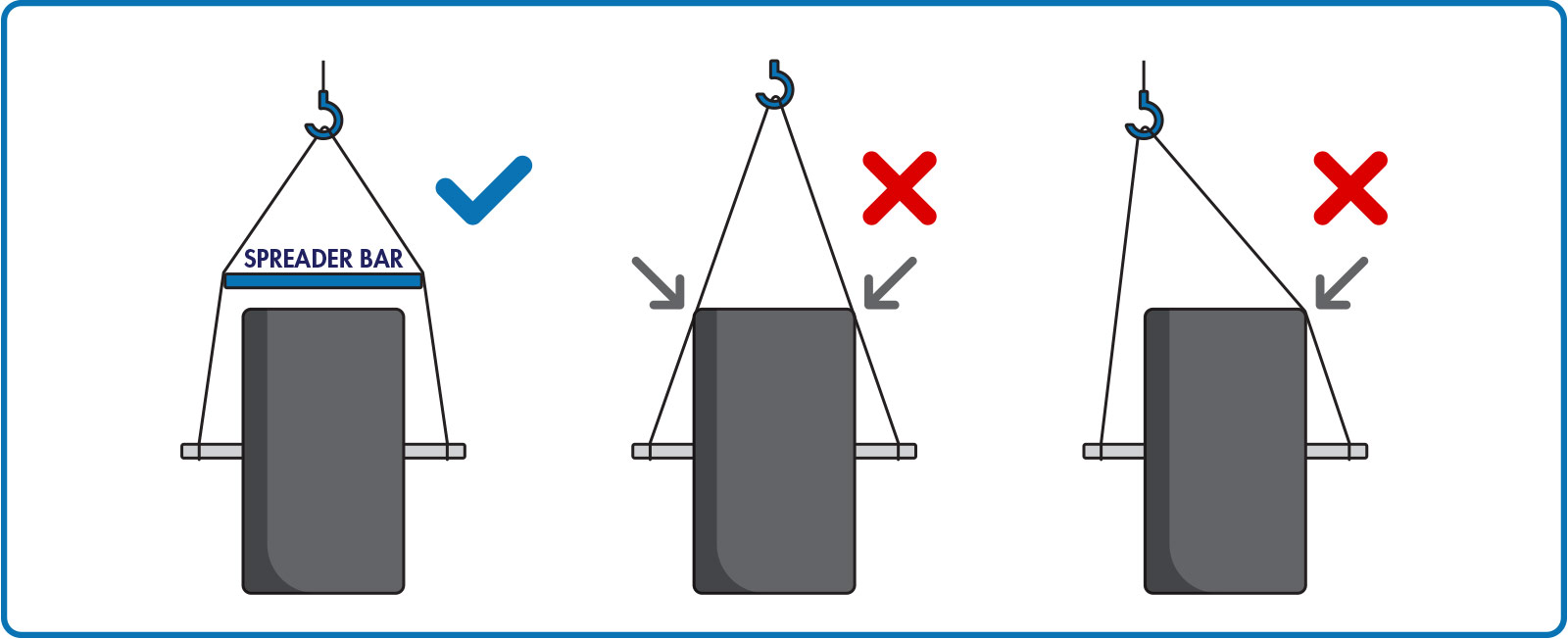
Off-loading conveyor belts with a spreader bar

When off-loading conveyor belts using an overhead crane, a spreader bar must always be used. This prevents slings or chains from contacting and damaging the belt edges. Damage of this nature may result in the loss of ten metres or more of usable belting.

Always use slings or chains of equal length to ensure the load is evenly balanced. This will assist with preventing the sling or chain from damaging the belt edges.

Conveyor belts are a high-value product and must be handled accordingly. Use the correct lifting equipment at all times, and fit stop blocks on the shaft to prevent slings or chains from slipping. The shaft must be solid and structurally capable of supporting the full load. Never use round pipe, as it may bend under load, causing the slings or chains to pull away from the pipe.

It is important to never rush the off-loading process.
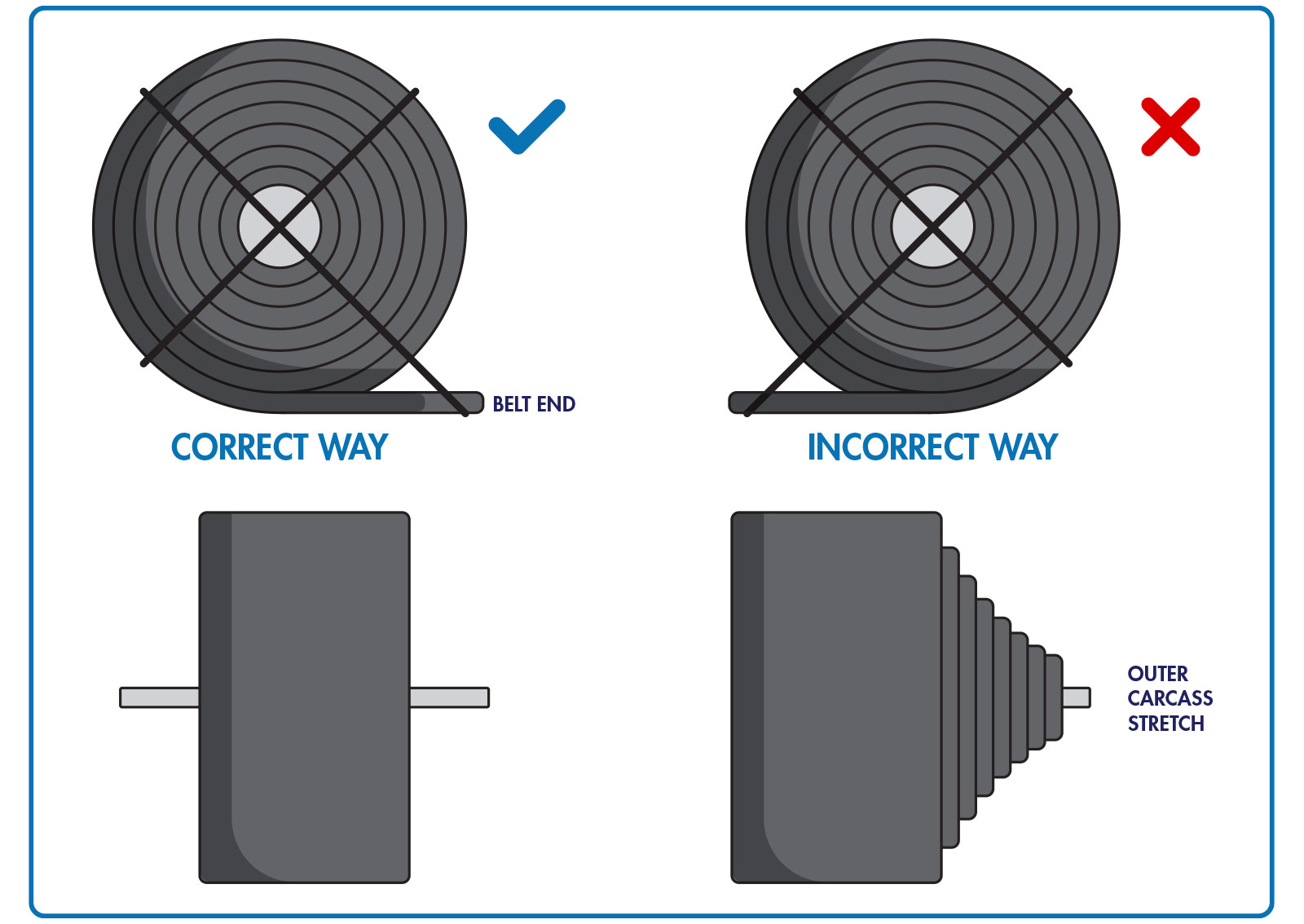
Rolling smaller Conveyor Belts

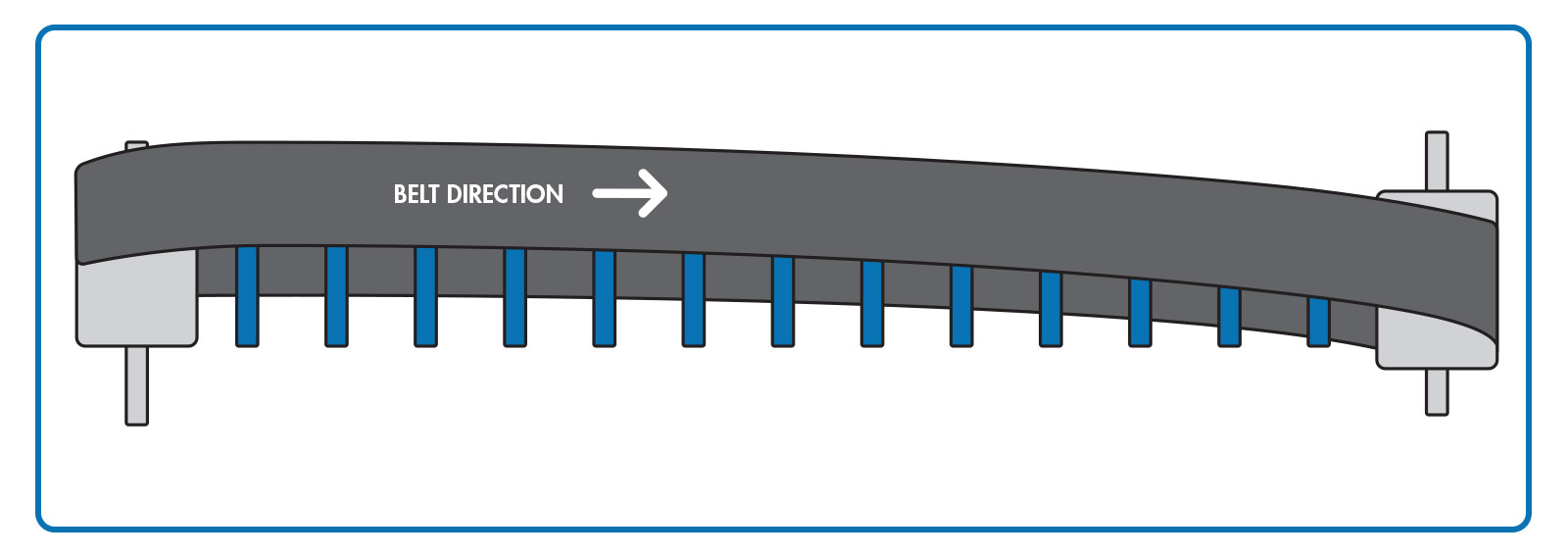
When rolling smaller conveyor belts for storage, always roll in the direction of the belt wrap. This prevents telescoping of the belt while it remains strapped.

Correct and incorrect way to roll conveyor belts

Rolling against the wrap direction causes the outer carcass to stretch, resulting in a bowed belt. In most cases, this bowing is permanent and makes the belt difficult to train on the conveyor structure. This will cause the belt to track into the structure, causing damage to both the belt and the structural components.

Belt direction and wrap direction guidance

Storing Conveyor Belts

Conveyor belts should be stored in a cool, dry environment. Storage under roofing is ideal; however, where this is not possible, belts stored outdoors must be fully covered with shade cloth or canvas sheeting.

Whitewashing belts can assist in deflecting direct sunlight, but this protection is temporary and often degrades quickly during rainy seasons.

Avoid the following conditions:

Atmospheric Conditions

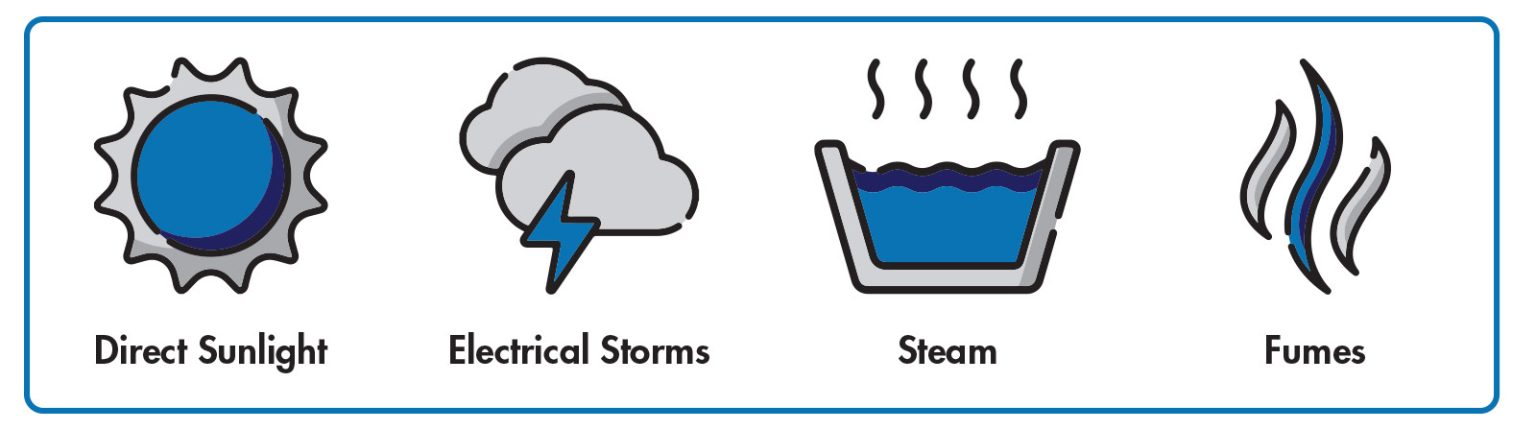
Direct sunlight, electrical storms, steam and fumes can all reduce the service life of stored belting.

Atmospheric conditions to avoid when storing conveyor belts

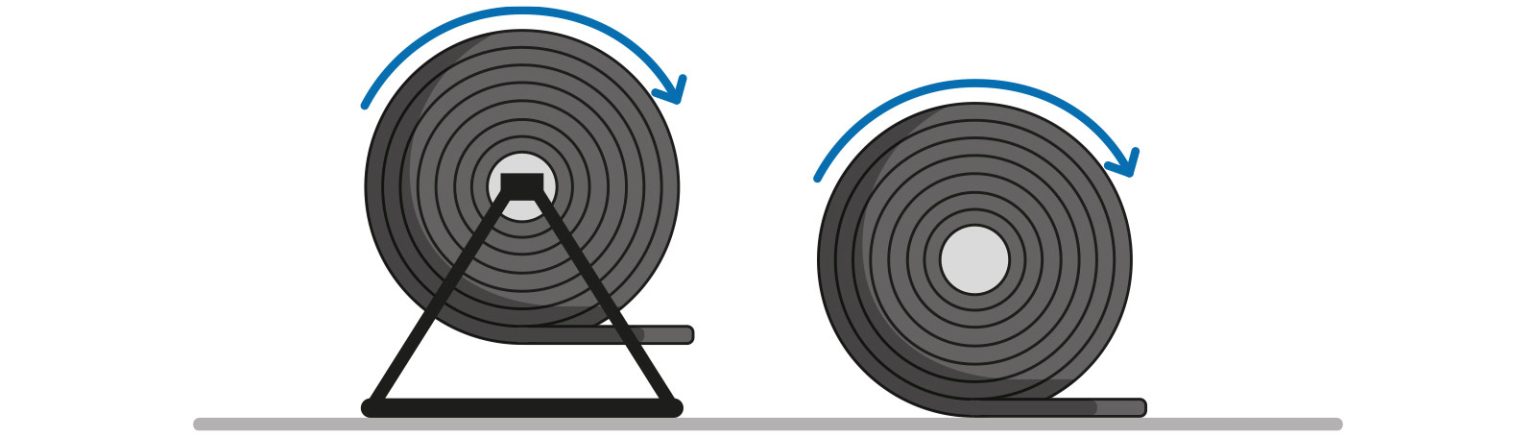
Even when stored under cover or outdoors, conveyor belts stored in rolls must be rotated every three to four months. A rotation of 90 degrees over this period is sufficient.

Belts stored on stands must be rotated in the direction of the wrap. Belts stored on the floor must follow the same rotation direction as outlined before.

Correct rotation direction for stored conveyor belt rolls

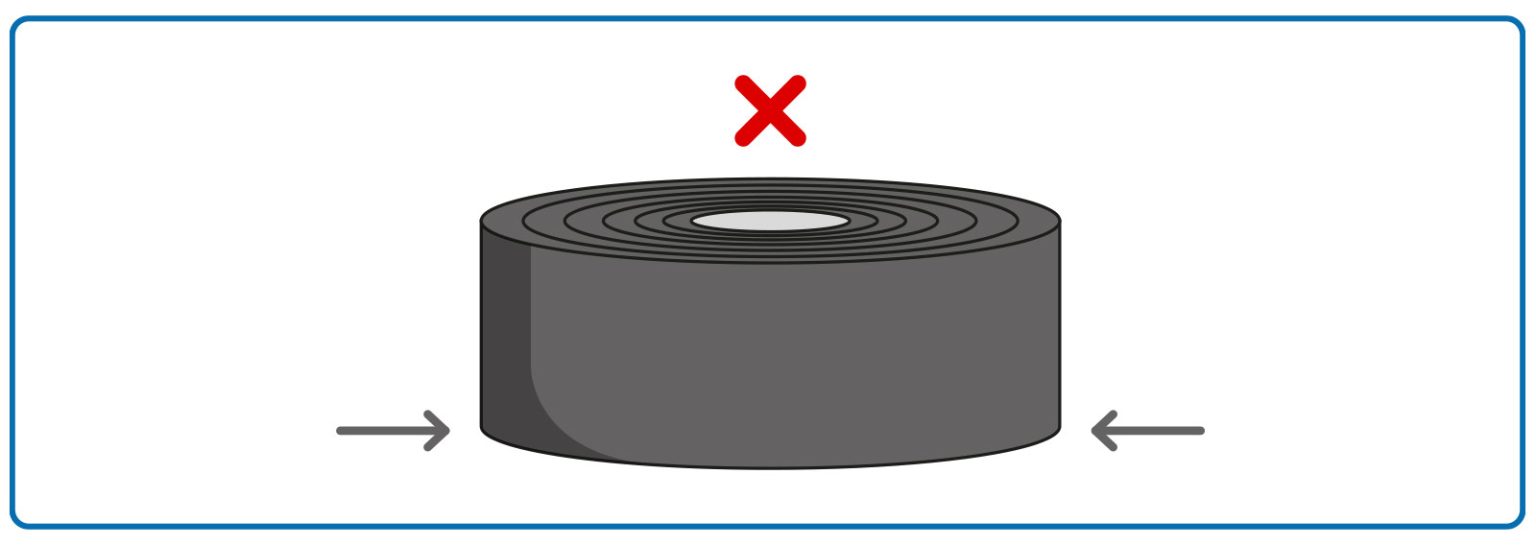
Under no circumstances should conveyor belts be stored lying flat on the floor. This will affect the outer edges of the carcass and increase the risk of belt bowing.

Incorrect flat storage of conveyor belts

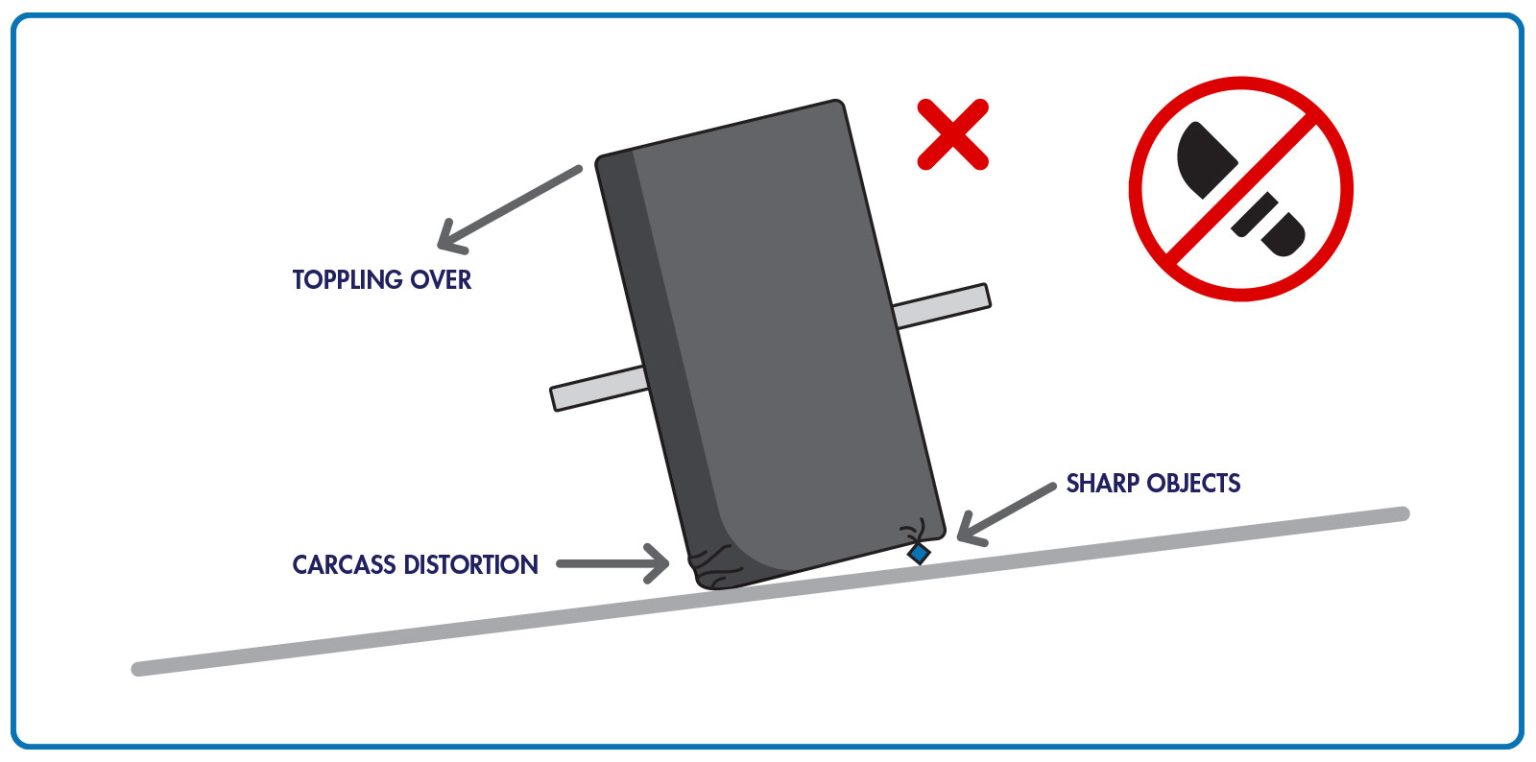
Conveyor belting must not be stored on uneven surfaces or in areas containing sharp objects such as stones, rocks or metal off-cuts.

Uneven surface and sharp objects to avoid when storing conveyor belts